Nina and Enzo Plan to Escape Andrew
The HousemaidNina and Enzo’s escape plan is a carefully concealed attempt to get Nina and Cecelia Winchester out from under Andrew Winchester’s control. Built around documents, cash, secrecy, and the promise of a safe departure, it shows how leaving an abusive home requires more than the desire to go: Nina must also evade surveillance, protect her daughter, and anticipate the story Andrew will tell if she runs. The plan comes close enough to make freedom feel imminent, then fails when Andrew finds one of the resources it depends on.
Background and Stakes
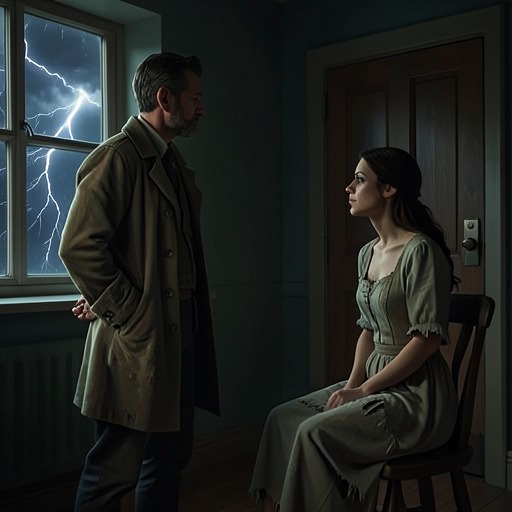
Nina’s escape effort grows out of a system of captivity that makes ordinary routes to help seem useless or dangerous. Andrew has imprisoned her in the attic and made it impossible for her to appeal to neighbors: he tells her the house is soundproofed below the attic, so even desperate screaming will not be heard. The confinement is not a single frightening episode but part of his wider control over her movements and her belief that no one outside will intervene.
For years, Nina has tried to persuade other people that Andrew is abusing her. Police, doctors, and even her best friend have called her crazy or delusional; she has been locked up for describing what he does. That history gives Andrew a weapon beyond the attic itself. Nina fears that if she leaves with Cecelia, he can present the flight as another mental-health crisis and accuse her of kidnapping their daughter or threatening her. Escape must therefore be planned not only as a physical departure but against the credibility Andrew has taken from her.
The danger to Cecelia shapes Nina’s decisions at every turn. Andrew has already nearly drowned the child, and he uses Nina’s disappearance as punishment when Cecelia disobeys. He makes Cecelia wear itchy, frilly dresses she hates, knowing that refusing or dirtying them may send Nina to the attic for days. He also repeatedly replaces a jar of peanut butter Nina throws away, despite Cecelia’s allergy, and sometimes slips some into her dinner so the child develops welts. Nina accepts punishment herself in the hope that Andrew will spare her daughter; leaving has to mean getting both of them beyond his reach.
Planning the Escape
Enzo becomes an ally after Nina finally tells him what Andrew has done. Where other people have dismissed her account, Enzo believes it, including what she tells him about the attic and finding Cecelia unconscious in the bathtub. His first response is to threaten to kill Andrew, but Nina refuses that route: she wants Andrew dead, yet will not risk spending her life in prison or draw Enzo into the same consequences. He shifts from the prospect of killing Andrew to helping Nina leave.
Their preparation depends on keeping their cooperation from attracting attention. Nina meets Enzo to plan, leaves her phone behind, and avoids driving directly to his home because she suspects Andrew has placed a tracker in her car. Instead, she parks at a fast-food restaurant and gets into Enzo’s vehicle out of sight. When friends from the Parent Teacher Association are present, she performs open irritation with Enzo, complaining that he is ruining her geraniums. The apparent quarrels are cover: a visible friendship might invite gossip, while a secret meeting must not look like one.
Enzo helps Nina think through the practical requirements of starting over. They need passports for Nina and Cecelia, a driver’s license, birth certificates, enough cash to sustain Nina until she can find work, and two plane tickets. Enzo offers money he has saved. Nina’s departure is to be timed around Cecelia’s school day: she reassures the child that she will be the one to pick her up, but withholds the plan until they can go directly to the airport. Cecelia has learned to fear the days when Andrew collects her after Nina disappears, and Nina does not want to expose the child to a promise that might be overheard or interrupted.
The plan is deliberately delayed for one more week. Nina intends to pack a bag, drive ninety minutes to a safe-deposit box, and retrieve a new passport, a new driver’s license, and a large amount of cash. She plans to buy the airline tickets at the airport with cash because an earlier attempt to buy a ticket in advance ended with Andrew waiting for her at the gate. Their precautions reflect the reach of his control: documents, transport, communications, and timing all have to be managed so that he cannot learn what she is doing.
Discovery and Collapse
The escape fails just as Nina believes Andrew is still unaware. After dropping Cecelia at school, she returns home expecting to have only one week left in the house and finds Andrew waiting at the dining table. He tells her it is time to go upstairs. Nina refuses, determined not to break her promise to collect Cecelia or submit to another stretch of confinement when she had believed freedom was near. Rather than go to the attic, she bolts through the front door and speeds out of the driveway, nearly hitting the gate.
Nina cannot immediately turn the flight into a workable escape. She considers taking Cecelia from school and driving toward the Canadian border, but she knows she lacks the passport and driver’s license needed to make that plan viable. She also expects Andrew to call the police and portray her as a wife suffering a relapse. His discovery has not only brought her flight to an early end; it has returned her to the risk that her account will be read through the discrediting diagnosis he has used against her.
One safeguard survives: Enzo had divided the preparations between two safe-deposit boxes. Andrew has found the box containing the passport and driver’s license, but he has not found the second reserve of cash. Nina drives to Enzo’s neighborhood, parks two blocks from his apartment, and walks the remaining distance before catching him as he gets into his truck. She tells him Andrew found one box and concludes that she cannot leave. The money she still has is a remnant of the plan, not enough to erase the immediate danger or restore the documents Andrew has taken.
The Contingency and Its Significance
The failed escape marks a change in the alliance between Nina and Enzo. Nina’s first refusal to accept his offer to kill Andrew establishes that she is trying to secure freedom without becoming a killer or sending them both to prison. After Andrew exposes the plan, however, Enzo names a second course: they go to Plan B, which is to kill Andrew. The shift makes the cost of the failed preparations explicit. With the documents compromised and Andrew alert, the original path out has narrowed into a confrontation with the man who controls the house.
The plan’s details also make clear why Nina cannot simply walk away. Andrew can isolate her behind soundproofing, use Cecelia as leverage, watch her through a hidden camera, and frame her flight as evidence of instability. Nina and Enzo answer those forms of control with countermeasures: separate cash reserves, concealed meetings, a phone left behind, a decoy performance for acquaintances, and a departure timed to Cecelia’s school pickup. Each precaution is practical, but none guarantees safety. The discovery of one box is enough to derail the documents and the timetable, while the second box shows that the plan had anticipated at least some possibility of being found.
The escape attempt is therefore both a concrete effort to leave and a measure of how much Andrew has restricted Nina’s choices. Its preparations briefly give her a future organized around an airport, two tickets, and a reunion with Cecelia after school. Andrew’s appearance at the dining table turns that future back into immediate flight. Enzo’s help remains, and so does the untouched cash, but Nina’s planned departure is stopped before she can take her daughter out of the house.